What a profile photo has to do in three seconds
Your first photo is seen small, on a card or in a list, and usually only for a moment. In that time it has to answer three questions: what does this person look like, are they real, and is the photo recent. Whether you look especially good comes second. A photo that leaves one of those three questions open loses to a plainer one that answers all of them.
The simplest test costs nothing. Shrink your photo on your phone to the size of a thumbnail and look at it at arm’s length. If you recognise your face straight away, it works as a first photo. If you have to search for yourself, it belongs further back or out of your profile altogether.
Light: the cheapest upgrade there is
No phone and no app makes as much difference as light. Soft daylight from the front or slightly to the side works best, at a window or outdoors on an overcast day. Harsh midday sun casts shadows under your eyes and makes you squint. Evening light just before sunset is warm and flatters almost every skin tone.
Indoors, the ceiling light is the most common mistake. Light straight from above leaves dark eye sockets and picks out every line. A flash flattens your face and turns the background black. Stand facing a window instead and switch the lamps off.
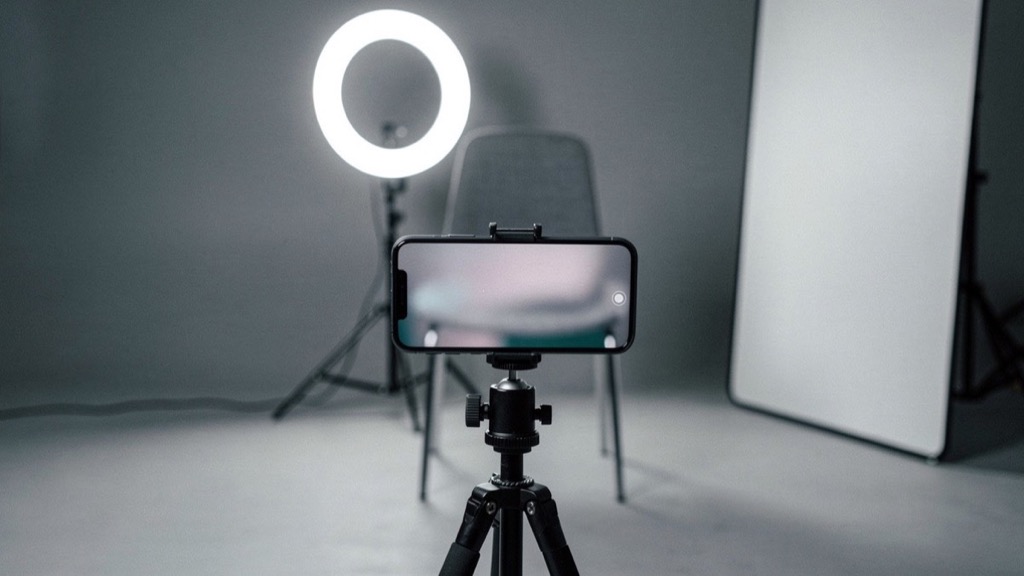
You do not need a ring light like the ones in many video setups. It lights your face evenly, but it shows up as a bright circle in your pupils and makes the photo look like a studio shot. For a dating profile, good window light looks more natural, and it is free.
Camera and distance: why selfies change your face
Your phone’s front camera has a wide-angle lens. Hold it close to your face and whatever is nearest to the lens looks bigger, especially your nose. That is pure optics and has nothing to do with how you actually look. Someone meeting you at a café afterwards will see a slightly different face from the one in the photo.
The main camera on the back does a better job, from a bit further away with a little zoom. Ask someone to take the photo from two or three metres, or put your phone on a tripod and use the self-timer. Keep the camera at eye level. From below, every chin looks wider, and from high above, the photo looks like an old social media profile picture.
Portrait mode with a blurred background can look good, but it often leaves visible errors around hair and the edges of glasses. Check the result at full size before you upload it. A normal photo with a calm background is a safer bet than portrait mode with frayed edges.
The selection: which photo goes where
Your first photo shows your face clearly, on your own, without sunglasses or a cap. The second shows you from the waist up or full length, in an everyday setting, so people get a sense of your build. After that come photos that say something about your life: a place you genuinely spend time in, or something you genuinely do.
Group photos never go first. If people have to guess which of the four faces is yours, they move on. A group shot further back is fine as long as you are easy to pick out. Photos with someone cropped out, on the other hand, always look like leftovers from a past relationship.
Four to six good photos are worth more than nine average ones. Every extra picture is one more chance to water down the impression. If you hesitate over a photo, leave it out.
Filters, editing and AI portraits
Adjusting brightness and contrast is fine, it only corrects what the camera got wrong. Filters that change your face are a different matter: smoother skin, a slimmer nose, bigger eyes. They shift the first impression in a direction that will not survive the first date. The conversation then starts with a letdown you built in yourself.
AI-generated portraits take this a step further. They often look too perfect, with flawless skin and backgrounds without any real detail, and that is exactly what makes many people suspicious. There is a practical problem too: photo verification compares a fresh selfie with your profile photos. The further your pictures drift from your real face, the more likely that comparison is to fail.
How the apps use your photos
On swipe apps like Tinder, the first photo does almost all the work, because the card is mostly picture. On Hinge, people can respond to one specific photo and add a comment. That turns every picture into a possible opening line, and a photo nobody can say anything about is a wasted chance. A shot of you cooking, on a hike or with your dog gives the other person a reason to write.
Verification is where the apps really differ. Tinder, Bumble and Hinge offer a photo check, and each scores 3 out of 5 for verification in our matrix, as do Dua and Badoo. embla announces photo matching, a selfie against the profile photos, and provisionally scores 5 out of 5 on this criterion. On embla, contact also only starts from a specific sentence or a specific photo, so a spark, the app’s wordless like, is always tied to exactly the sentence or photo it was meant for.
Privacy: what your photo gives away
A profile photo shows more than your face. House numbers, street signs, the view from your window, a work badge on your belt or a number plate all make you easier to find. Go through the background of every photo once, on purpose, before you upload it. Children, your own or anyone else’s, have no place on a dating profile.
It also helps to use photos that are not already public on your other profiles. With a reverse image search, anyone can check in a few steps where else a photo appears. For you, that is a way to spot fake profiles, but for others it is also a route to your full name and your employer.
Image files can contain the location where they were taken. Whether an app strips that information on upload is something you cannot see from the outside. So turn off location tagging in your camera app before you take photos for your profile.
A ten-minute check for your profile
Lay your selection out side by side and go through it with four questions. Is the first photo recognisable at thumbnail size? Would someone recognise you in a café from these photos? Does no picture show anything that makes you easy to find? Is every photo from after your last visible change, such as a haircut, a beard or new glasses? A no to any of these means: swap the photo.
Then measure, not by gut feeling but by conversations. Likes are a poor measure, because they cost nothing. After two weeks, count how many conversations went beyond a few messages. Then swap your first photo, keep everything else the same and compare the next two weeks. That way you find out which picture actually works for you, instead of relying on general advice.